
Multi AI Models Strategy and the Rise of Diversified Intelligence in Modern Teams
A multi AI models strategy has quickly become one of the strongest competitive advantages inside modern organizations. While early AI adoption focused on a single model for all tasks real world usage now shows a very different pattern. Teams perform better when they rely on multiple models with distinct strengths. One model may excel at reasoning another at coding another at text generation and another at structured analysis. Instead of relying on a single intelligence system companies increasingly turn to multi Ai models strategy frameworks to cover the full spectrum of their operational needs.
This article explores the reasons behind the rise of a multi AI models strategy and examines how it changes productivity accuracy collaboration and decision making. The research perspective includes references to external studies such as McKinsey through the link mckinsey.com and one internal reference to intrascope.app/blog for continued exploration of AI optimization topics.
Why relying on a single model limits organizational performance and how a multi model AI strategy solves the problem
When companies adopt artificial intelligence for the first time they typically start with a single model. This is natural because early tools were built around one algorithm. As teams mature they quickly discover the limitations of this approach. Each model has a unique architecture and therefore unique strengths. A model that performs well in creativity or brainstorming may not give the best results in highly technical tasks. A model that produces excellent code may not be ideal for business analysis. A model that writes fluently may struggle with long reasoning chains.
A single model approach forces organizations into a narrow intelligence path. Employees must adapt their work to the strengths and weaknesses of that one model even if the model itself is not optimized for their specific task.
A multi model AI strategy resolves this by offering model diversity. Employees choose the right intelligence system based on the nature of the task. Instead of forcing all problems into one structure the team adapts the model to the task itself. This increases accuracy reduces cognitive load and improves overall output quality.
How a multi model AI strategy improves reasoning depth and analytical quality
This layered approach significantly improves reliability and allows teams to make decisions with greater confidence. Independent research such as the Gartner insights on enterprise AI strategy also highlights the value of using multiple models in parallel to validate outputs and strengthen analytical quality.
Artificial intelligence models differ significantly in their reasoning ability. Some excel at long chain logical tasks while others prioritize short form efficiency. When organizations rely on only one model they risk using a tool that underperforms in complex scenarios.
A multi AI models strategy allows the team to select the strongest reasoning model for analytical tasks. When a company uses multiple models simultaneously it increases the probability of more accurate answers because each model can validate or refine the conclusions of another. This creates a layered reasoning process similar to peer review systems used in academic research.
For example one model can generate an analysis another can review it and a third can suggest improvements. This layered approach significantly improves reliability and allows teams to make decisions with greater confidence.
Why a multi model AI strategy enhances creativity and problem solving
Creativity does not emerge from uniformity but from diversity. AI models are no exception. Each model has a unique expressive style vocabulary pattern generation structure and creative signature. When teams rely on only one model they limit their creative range. A multi model AI strategy opens up new possibilities.
One model may propose unconventional ideas another may refine them and a third may help structure them into an actionable plan. This combinational intelligence produces richer and more innovative results.
Teams that use a multi AI models strategy also avoid creative repetition. A single model tends to produce predictable patterns that become apparent over time. Employees notice similar phrasing ideas or structures which reduces novelty. By introducing multiple models the organization gains fresh perspectives continuously.
How multi model AI strategy lowers error rates and improves accuracy
Every AI model has blind spots. No single system is perfect. A model may be excellent at summarizing but weak at numerical analysis. Another may excel at coding but struggle with long text coherence. When organizations depend on a single model errors become systemic. They repeat the same type of error consistently without detection.
A multi model AI strategy dramatically reduces this risk. When multiple models analyze the same task the team receives a variety of outputs. Differences between model responses help highlight potential inaccuracies. Teams can cross check results compare reasoning patterns and combine strengths from several sources.
This approach mimics real world decision making processes where experts with different backgrounds evaluate the same problem. A multi model AI strategy delivers similar diversity with much greater speed.
How a multi model AI strategy improves coding workflows and technical production
Software development is one of the areas where multi model usage creates enormous gains. Different models specialize in different aspects of code generation. Some models write clean and readable code while others excel in debugging. Some provide strong architectural suggestions while others focus on refactoring.
A multi AI Models strategy allows developers to choose the right model for each step. One model generates the initial code another evaluates security concerns and a third tests edge cases. This reduces errors accelerates development and increases code quality.
Teams that rely on one model often experience limitations when working with specific frameworks libraries or languages. Switching to a multi model AI strategy solves this by enabling model diversity that matches the complexity of modern development environments.
How a multi model AI strategy increases long term team productivity
Productivity does not only depend on speed. It also depends on accuracy context retention collaborative flows and decision support. A multi AI models strategy strengthens each of these pillars.
Employees work faster because they choose models optimized for specific tasks.
The organization produces more reliable work because reasoning is validated across models.
Collaboration becomes more effective because different models handle different stages of the process.
Context rich work increases because models can cross reference previously generated content.
Over time these improvements multiply. The organization becomes more resilient and flexible because it is not dependent on one model that might change its pricing or capabilities. A multi model AI strategy also reduces operational risk by preventing overreliance on a single provider.
How a multi model AI strategy transforms cross departmental communication
Cross departmental communication often suffers from inconsistent language style and misaligned context. A single model approach cannot address the needs of marketing sales operations development and management equally well. Each department requires different strengths from an AI model.
A multi AI models strategy solves this mismatch. Marketing can use models with strong creative output. Sales can use models optimized for messaging and personalization. Product teams can use models optimized for long reasoning. Development teams can use models specialized in code. Operations can use models with strong analytical precision.
Instead of forcing every department to adjust to one model the organization gives each department the optimal intelligence tool. This dramatically improves communication clarity and workflow stability.
Why a multi model AI strategy requires centralization
Without a unified platform a multi model AI strategy becomes chaotic. Employees would need to switch between tools remember multiple dashboards and manually transfer data. Model context would become fragmented and knowledge would be lost.
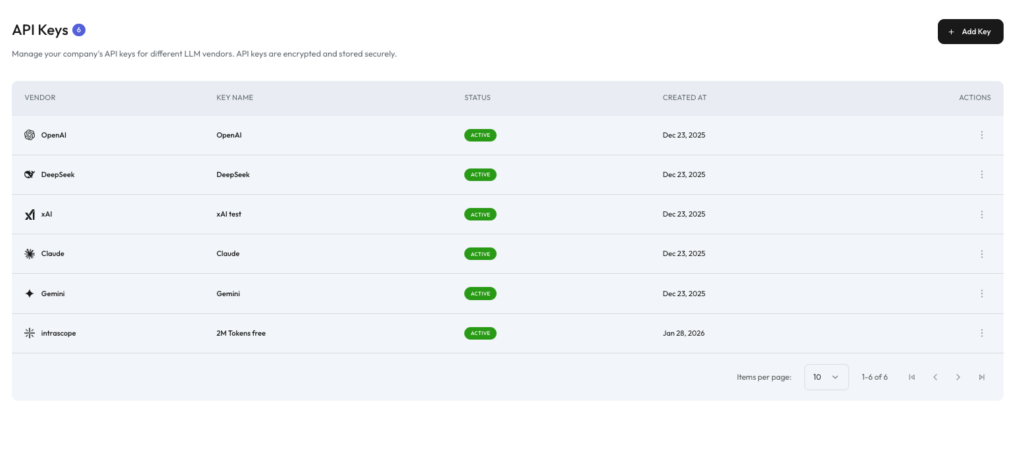
Centralization solves this. It allows teams to use multiple models inside one environment with shared context consistent access policy unified documentation clear usage limits and transparent cost management. The organization receives the benefits of a multi model AI strategy without the operational complexity that usually accompanies it.
A centralized platform makes it possible for all models to coexist in harmony. Teams stay organized and leaders gain full visibility into how each model contributes to output quality productivity and cost.
Conclusion connecting multi model AI strategy with Intrascope
A multi model AI strategy gives organizations a real and measurable advantage. Instead of relying on one model for every task teams diversify their intelligence stack. This improves reasoning accuracy creative output coding quality analysis reliability and long term productivity.
However a multi model AI strategy is only effective when implemented inside a unified environment. Without centralization teams fall into fragmentation inconsistent results and operational friction.
Intrascope was designed precisely for this purpose. It provides one secure space where teams can use multiple models together share context validate results collaborate smoothly and control cost. By enabling a true multi model AI strategy Intrascope transforms artificial intelligence from a scattered assistant into a powerful collective intelligence system that elevates the entire organization.