Blog/·Updated
Case Study: How an 8-Person Marketing Agency Ran Campaigns for $27 in One Month
By Vladimir Krstic, Founder at Intrascope
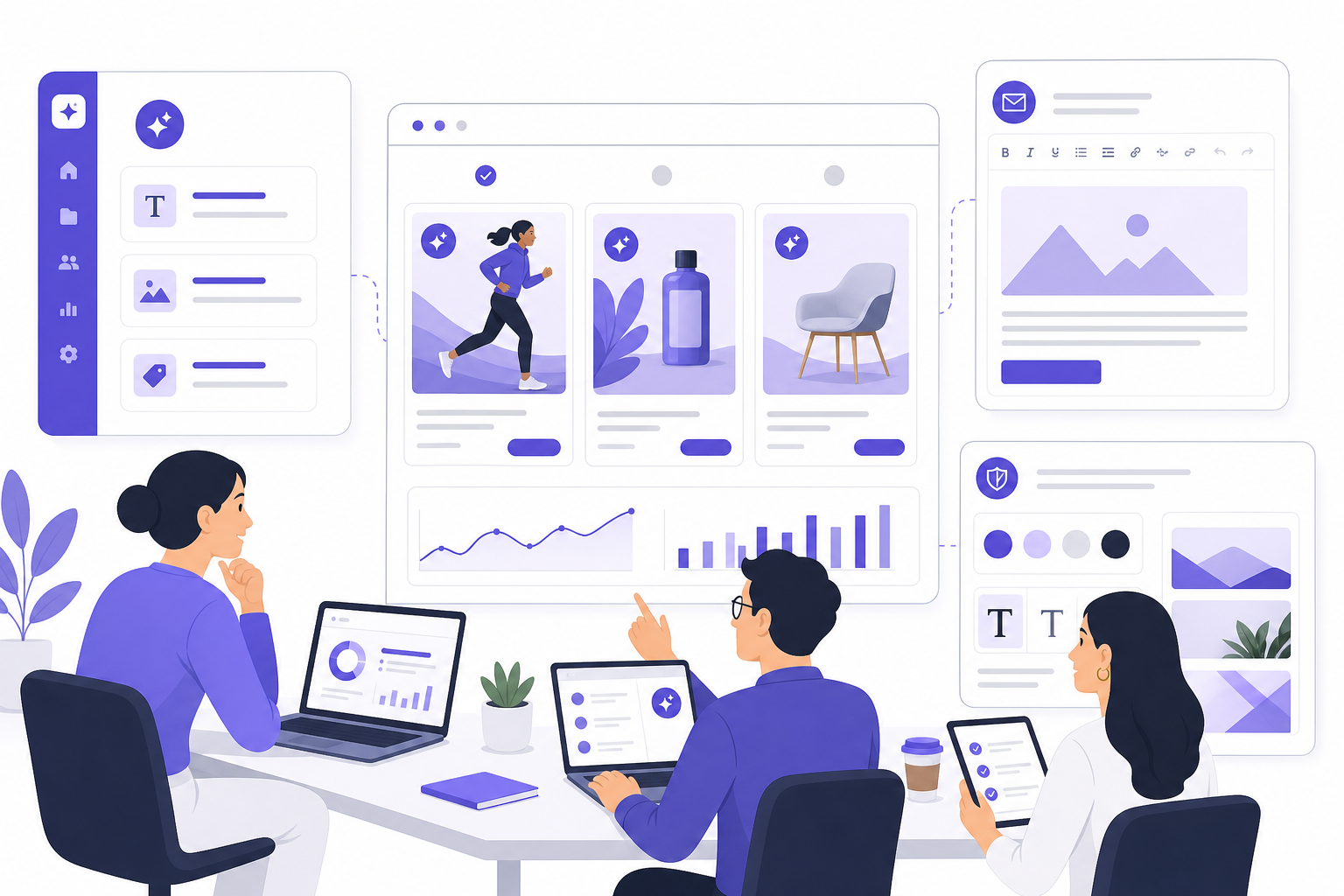
An 8-person marketing agency came to Intrascope with a workflow problem, not a curiosity about AI. They were already running campaigns for clients, but copy lived in private chats, brand voice drifted between accounts, and nobody could see which models were burning budget on which project.
They needed one workspace where strategy, drafts, and final campaign copy could move through the same governed environment. One month after rollout, the team was running active client campaigns through Intrascope, using manifests for shared context, projects per client, and automatic model orchestration from brainstorming to finished copy. Total API spend for the month: $27.
The company profile
The agency produces campaign concepts, ad copy, landing page drafts, email sequences, and social content for multiple clients at once. Speed matters, but so does consistency. Every deliverable has to sound like the client, not like whichever writer opened ChatGPT last.
- Team size: 8 people
- Prior AI usage: scattered personal ChatGPT accounts and ad hoc prompts
- Main pain point: no shared campaign context, uneven copy quality, no visibility into model spend by client
- Goal: run campaigns faster with shared brand context and smarter model routing
This is a familiar agency pattern. For a broader look at the same workflow model, see our AI workspace for marketing teams page.
Where they started
Before Intrascope, campaign work inside the agency looked like this:
- Each person kept client context in private chat threads
- Brainstorming, rewriting, and final copy happened in different tools or tabs
- Brand voice rules were copied manually from doc to doc
- Premium models were used by default because nobody had time to pick models per task
- Leadership had no clear view of usage or cost per client account
The team was already using AI every week. They were just paying for it in inconsistency, rework, and unnecessary model spend.
What Intrascope changed
1. One project per client campaign
Each active client campaign got its own project. Writers, strategists, and account leads worked inside the same environment instead of passing screenshots and pasted prompts around Slack.
2. Manifests as shared campaign context
The agency built manifests for the things that usually got lost between chats: brand voice, ICP notes, offer details, words to avoid, CTA rules, and channel-specific tone. That shared context followed every request in the project. Learn how this works in what is an AI Manifest in Intrascope.
3. Orchestration from brainstorm to final copy
This is where the workflow really changed. Instead of running every step through one expensive default model, the team let orchestration match the task:
- Brainstorming and angles: faster, lower-cost models for volume and exploration
- Variant generation: mid-tier models for headlines, hooks, and ad iterations
- Final campaign copy: premium models for polished landing page text, email sequences, and client-ready messaging
- Rewrites and formatting: lighter models for shortening, channel adaptation, and cleanup
The team did not manually switch models for every step. Intrascope routed requests based on task type. Read more in why automatic model orchestration matters.
4. One workspace, multiple providers
The agency connected the providers they already wanted to use and kept everything inside one governed workspace with usage visibility by user, project, and model. That is the core idea behind a multi AI workspace for teams.
How the campaign workflow looked in practice
A typical campaign flow inside Intrascope looked like this:
- Create a project for the client campaign
- Attach a manifest with brand voice, audience, offer, and channel rules
- Generate angles and concept directions with lighter models
- Produce ad, email, and landing page variants in the same project
- Run final copy through premium models only where polish mattered
- Share outputs internally without losing the campaign context behind them
The result was not just faster drafting. The agency could move from rough idea to client-ready copy without rebuilding context every time someone opened a new chat.
First-month vendor spend: $27
At the end of the first month, total connected API usage across the agency came to $27.
For an 8-person team running live client campaigns with multiple models, manifests, and daily copy work, that is a strong number. It worked because orchestration kept brainstorming and rewrites on efficient models while reserving premium capacity for the final campaign copy that actually left the building.
What subscription pricing would have looked like
If the agency had bought individual Plus-style subscriptions for all 8 people at roughly $20 per month, the monthly cost would have been around $160, regardless of how lightly or heavily each person used AI.
That would still have left them without shared manifests, per-client projects, orchestration, or spend visibility. They would have paid more and kept the same workflow problems.
For agencies weighing the same decision, see AI workspace for agencies and AI cost optimization for teams.
Why this case study matters
Marketing teams need shared context, not more chats
Campaign quality breaks when brand rules live in private threads. Manifests gave this agency a reusable context layer that made every model output sound more like the client.
Orchestration fits creative workflows
Creative work is not one task. It is brainstorming, iteration, refinement, and final delivery. Routing each step to the right model cut waste without cutting quality on the copy that mattered most.
Small teams still benefit from structure
You do not need a 50-person company to justify a shared AI workspace. An 8-person agency running multiple campaigns can get immediate value from projects, manifests, and usage visibility.
Usage-based billing matches agency reality
Some team members brainstorm heavily. Others mostly polish final copy. A seat-based subscription charges the same for both. API usage through Intrascope matched how this agency actually worked.
For governance and rollout principles, see AI governance for teams.
Key takeaways
- 8-person marketing agency running live client campaigns in Intrascope
- Projects per client and manifests for brand voice, ICP, and campaign rules
- Model orchestration from brainstorming to final campaign copy
- First-month API usage totaled $27
- Equivalent personal subscriptions would have cost around $160/month for the same team size
- Better consistency, faster iteration, and real spend visibility from one workspace
Conclusion
This agency did not need AI to replace strategists or copywriters. They needed AI to stop losing campaign context, stop overpaying for the wrong model on every step, and stop running client work through scattered personal accounts.
With Intrascope, they got shared manifests, orchestrated models, and project-based campaign workflows for $27 in month-one API usage.
For a different adoption path at larger scale, read our 50-person enterprise pilot case study. More customer stories are coming soon on the Intrascope blog.
Try Intrascope free for 7 days. No credit card required. Or book a call if your agency wants help structuring campaigns inside one workspace.
Intrascope for teams
Give your team one shared AI workspace instead of scattered accounts
Centralize model access, projects, manifests, and usage visibility. Start with a free trial or book a short walkthrough with our team.
7-day free trial · No credit card required
Closer to this topic: create reusable AI context.
Related articles